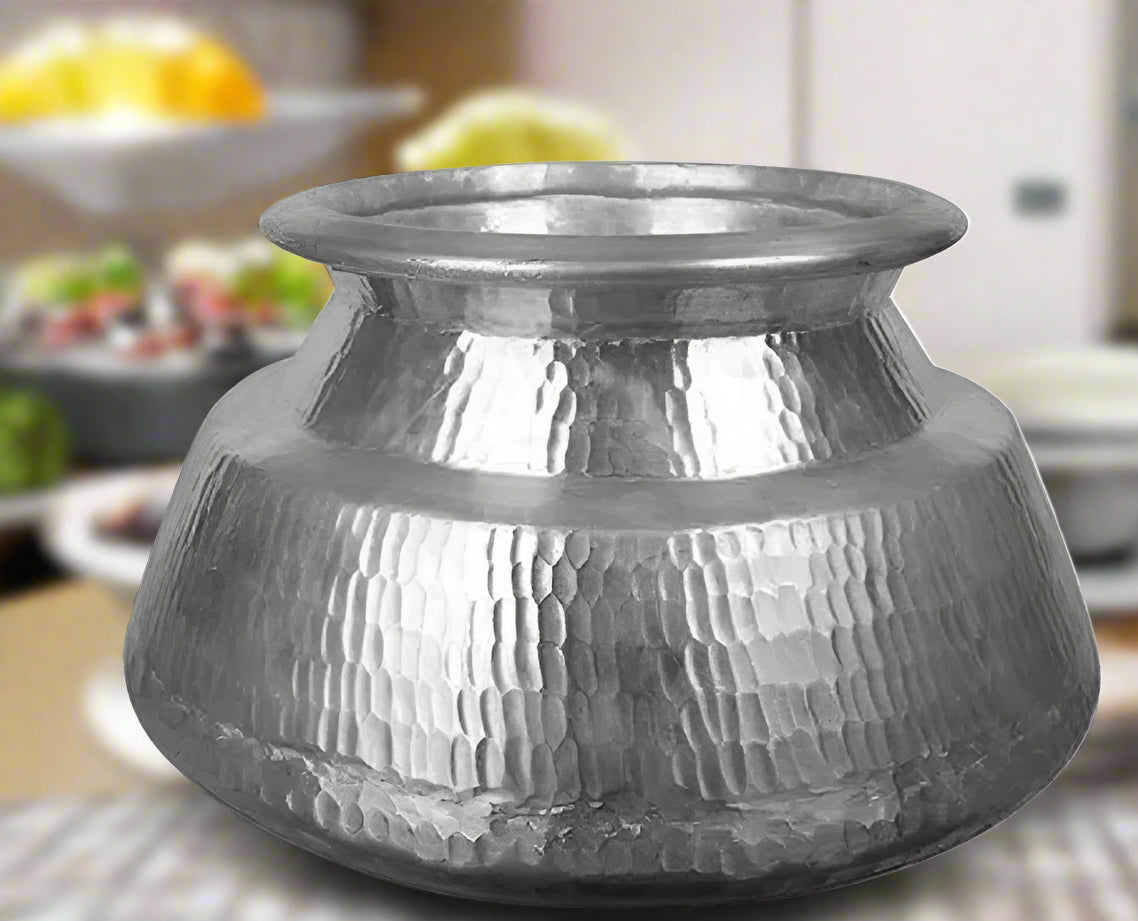
Delhi Deg – Heavy Hammered Aluminium Biryani Daig with Lid
Delhi Deg – Heavy Hammered Aluminium Biryani Daig with Lid
Kan beschikbaarheid voor afhalen niet laden
The Traditional Bombay Deg — Built for Real Biryani
This is the classic Bombay Deg (also known as daig, degh, or handi) — the heavy, hand-hammered aluminium pot found in every serious biryani kitchen, from home cooks to catering setups. Its wide belly and slightly narrow mouth are shaped specifically for dum-style cooking, where trapped steam and even heat are what separate good biryani from great biryani.
Why You'll Love It:
- 🔨 Hand-Hammered Silver Finish – Strengthens the metal and improves even heat spread across the base
- 🍛 Traditional Deg Shape – Wide belly, narrow mouth — built specifically for dum biryani, pulao, and daigh-style cooking
- 💪 Heavy-Gauge Aluminium – Solid, warp-resistant, made for long hours on high heat
- 🔒 Fitted Lid Included – Locks in steam for proper dum, keeping rice layers moist and aromatic
- 🖐️ Sturdy Handle – Secure grip for lifting and serving, even when full
- 🔥 Excellent Heat Retention – Stays hot well after it's taken off the stove
- 🧼 Long-Lasting Build – A genuine one-time investment piece, passed down for years in most households
Why a Deg Cooks Biryani Better
A Bombay Deg isn't just a big pot — its shape is the whole point. The wide base gives rice room to layer properly with the meat/masala underneath, while the slightly narrower top traps steam more efficiently than a flat, straight-sided pot. This is exactly why professional biryani cooks, wedding caterers, and hotels still use hammered aluminium degs instead of regular saucepans — the shape and material directly affect how evenly the rice steams during "dum."
The hand-hammered surface isn't decorative either. The hammering process compresses and strengthens the aluminium, making the deg more resistant to warping from years of high-heat use, while also helping distribute heat more evenly across the base — fewer burnt spots, more consistent cooking from edge to center.
Unlike non-stick or coated pots that wear down within a couple of years, a solid aluminium deg like this is built to last for decades. It's a staple for weddings, Eid, large family gatherings, and any occasion where you're cooking biryani or pulao in bulk rather than a small daily portion.
Perfect For:
Dum biryani, pulao, Bombay biryani, Sindhi biryani, curries, daigh-style bulk cooking, weddings and events, catering, and large family meals.
Care Instructions:
Hand wash with warm water and mild soap. Avoid steel wool or abrasive scrubbers on the hammered surface. Dry immediately after washing to prevent water spotting.
What's Included:
- 1 Hammered aluminium Bombay deg (pot)
- 1 Matching fitted lid
Product Specifications
| Product Type | Bombay Deg / Daig / Handi |
| Material | Heavy-gauge hammered aluminium |
| Finish | Hand-hammered silver |
| Lid | Included, fitted |
| Handle | Sturdy carry handle |
| Stovetop Compatibility | Gas stoves (not induction-compatible) |
| Ideal Use | Dum biryani, pulao, bulk rice & curry cooking |
Available Sizes & Capacity
| Size | Salan Capacity | Biryani Capacity | Price |
|---|---|---|---|
| 12 No | 1 kg | — | Rs 6,499 |
| 14 No | 3 kg | 1 kg | Rs 7,250 |
| 16 No | 5 kg | 2 kg | Rs 8,850 |
| 18 No | 8 kg | 3 kg | Rs 11,999 |
| 20 No | 10 kg | 4 kg | Rs 14,499 |
| 22 No | 13 kg | 5 kg | Rs 18,499 |
| 24 No | 16 kg | 6 kg | Rs 21,999 |
Cook real dum biryani the traditional way — shop the Bombay Deg only at HS Home.
Frequently Asked Questions
Q: What is a Bombay Deg used for?
A: A Bombay Deg (also called daig, degh, or handi) is a traditional wide-bellied aluminium pot used mainly for dum-style biryani and pulao, where its shape helps trap steam and cook rice evenly in large batches.
Q: Is this deg safe for gas and induction stoves?
A: This deg is designed for gas stove use. Pure aluminium cookware is not induction-compatible unless it has a steel base plate.
Q: What size deg should I buy for a family vs a wedding/event?
A: For a small family of 4-6, the 12No (1kg) or 14No (3kg salan / 1kg biryani) size is usually enough for a single meal. For medium gatherings of 15-20 guests, the 18No (8kg salan / 3kg biryani) or 20No (10kg / 4kg) works well. For weddings, large events, or catering, the 22No (13kg / 5kg biryani) or 24No (16kg / 6kg biryani) is recommended to cook in bulk without multiple batches.
Q: What does "No" mean in the size (e.g., 12No, 24No)?
A: The "No." refers to the traditional deg sizing number used in Pakistan's cookware market — a higher number means a larger deg with greater salan (curry) and biryani capacity, as shown in the size chart above.
Q: Does the lid seal well enough for proper dum cooking?
A: Yes, the lid sits securely on the rim to trap steam, which is essential for dum-style biryani and pulao where the final steaming step depends on trapped heat.
Q: How is a deg different from a regular cooking pot?
A: A deg has a distinct wide-belly, narrow-mouth shape designed specifically for layering rice and meat and trapping steam efficiently — unlike straight-sided pots, which don't hold heat and steam the same way.
Q: How do I clean and maintain a hammered aluminium deg?
A: Hand wash with warm water and mild soap. Avoid steel wool or abrasive scrubbers on the hammered finish, and dry thoroughly after each wash to prevent water spots.
Q: Is this deg suitable for catering or restaurant use?
A: Yes — its heavy-gauge build and large capacity make it a popular choice among caterers, biryani restaurants, and households cooking for big gatherings.